Industry Highlights & Challenges
Z2 analysis of East China as a global electronics manufacturing hub, covering GDP, industrial parks, EMS companies, semiconductor fabs, transportation infrastructure, and supply chain risk factors across seven provinces.
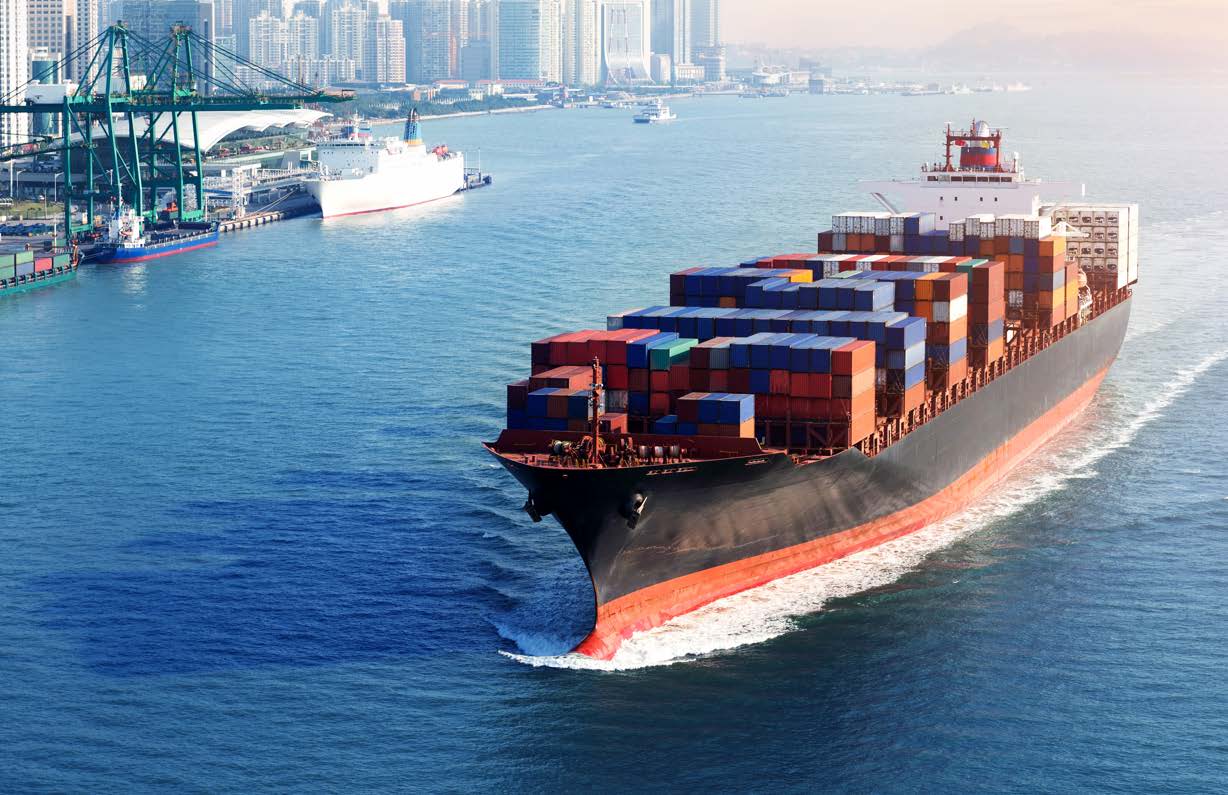
The East China region supports a diverse portfolio of industries. In addition to its strong presence in international finance, the region is a force on the global manufacturing stage, especially for electronics and machinery. It is also a cornerstone for several other key industries, including information technology, e-Commerce, biotechnology, pharmaceuticals, renewable energy, automotive manufacturing, and textiles.
In 2023, East China, which includes the provinces of Shanghai, Jiangsu, Zhejiang, Anhui, Fujian, Jiangxi, and Shandong, had a GDP of over $6.8 trillion, representing 38% of mainland China's total gross domestic product. The region remains instrumental to the nation's substantial economic expansion and continues to be a key factor in China's current status as the world's second-largest economy.
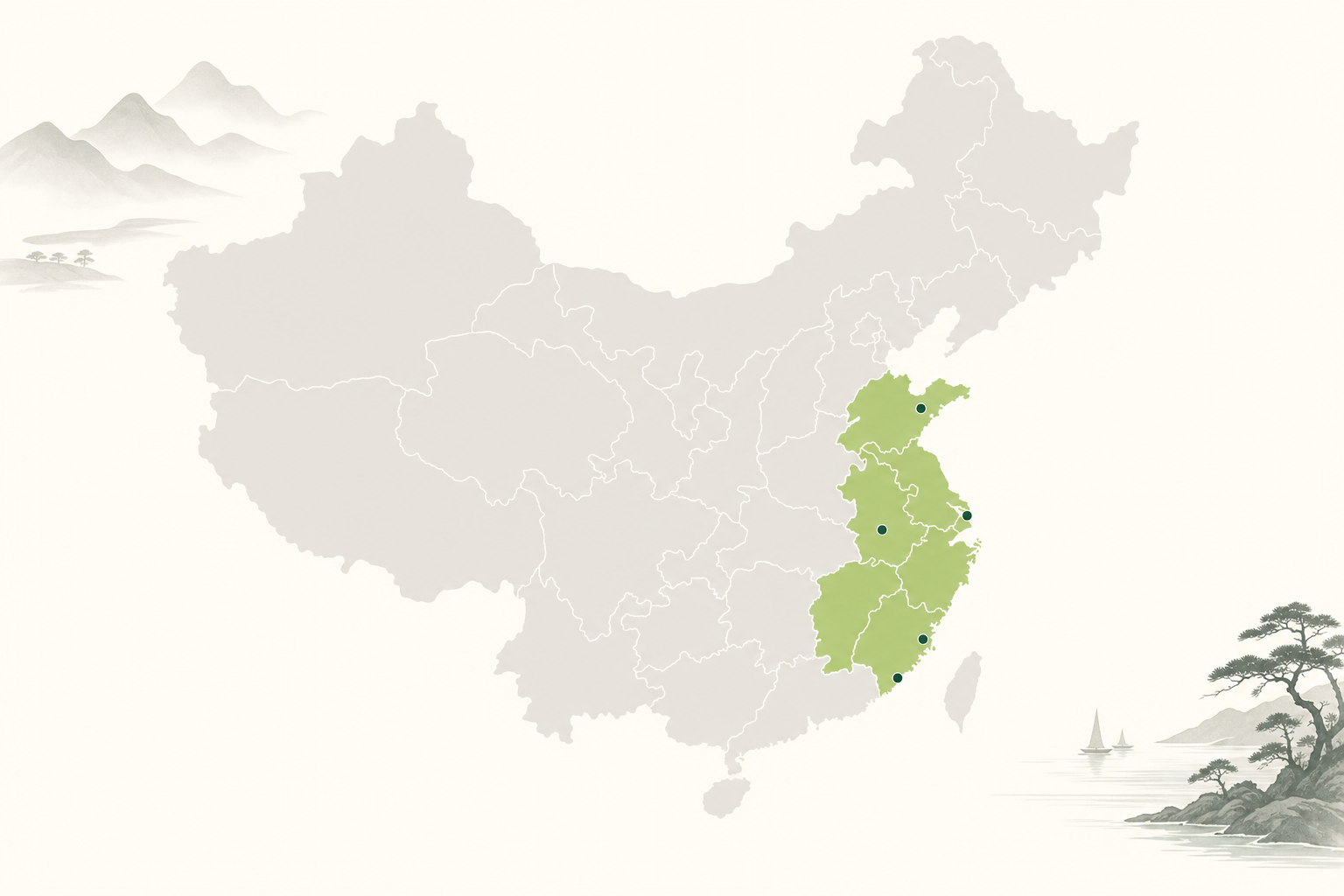
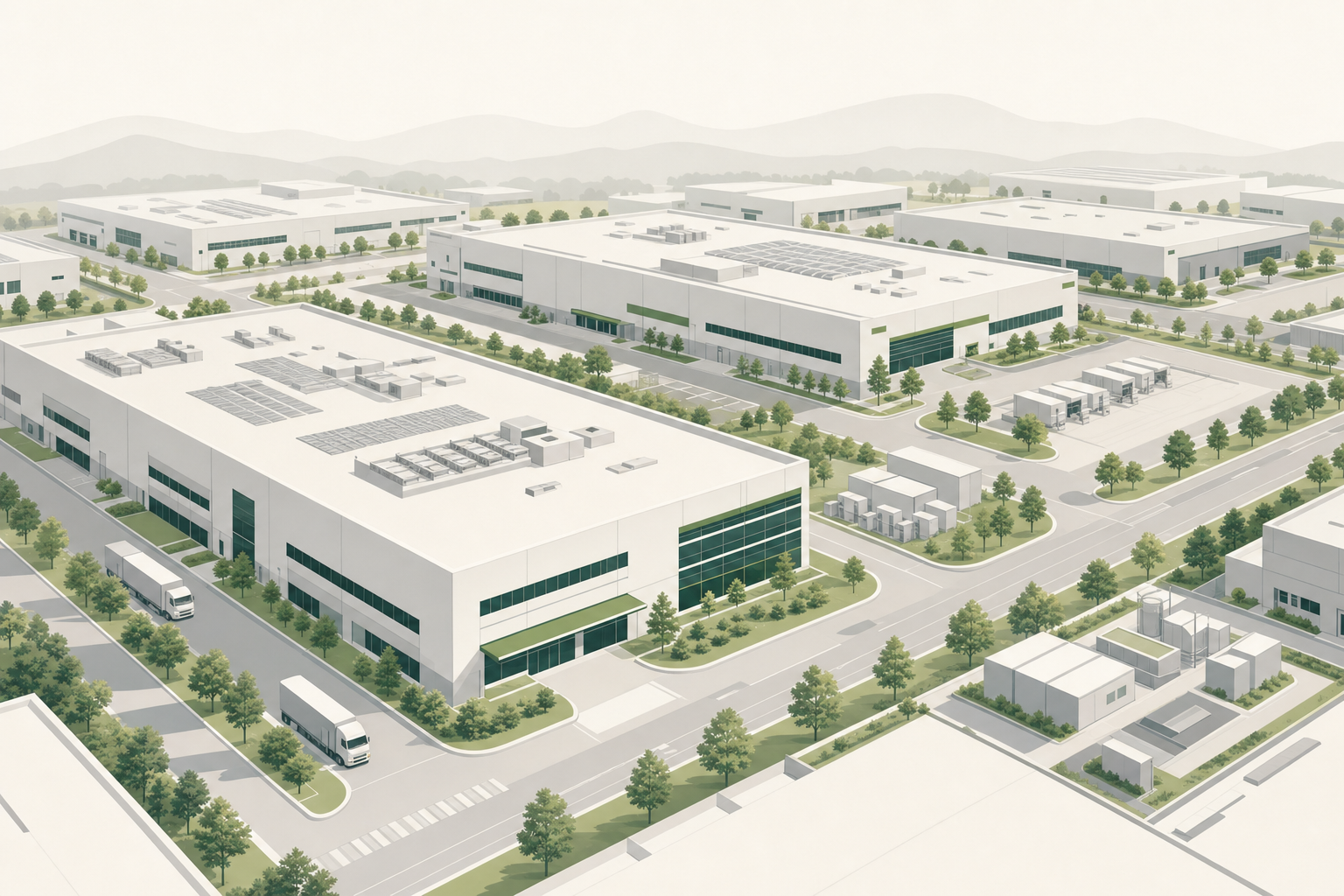
East China features a population of over 384 million people, many of whom are located in one of its seven provincial capitals. The region holds 42.5% of China's industrial parks: roughly 33,105 zones that support a wide range of industries and foreign direct investment.
| Capital City | Key Industries |
|---|---|
| Shanghai | IT, Automotive, Machine-building, Retail |
| Nanjing | Electronics, Automotive, Petrochemicals |
| Hangzhou | Electronics, Pharmaceuticals, IT |
| Hefei | Electronics, Electric Vehicles |
| Fuzhou | Electronics, Biopharmaceuticals |
| Nanchang | Aircraft, Automotive, Chemical Engineering |
| Jinan | Pharmaceuticals, Healthcare |
East China features a sophisticated network of transportation hubs that connects the region to the rest of the country and serves as a vital gateway to global commerce. East China is home to 53 of the 259 airports that make up the country's sprawling air-travel infrastructure.
3.1M
metric tons/year at Shanghai Pudong
500M+
tons/year through Port of Shanghai
3,600 mi²
covered by Ningbo-Zhoushan Port
191
berths at Ningbo-Zhoushan Port

East China hosts a broad range of manufacturing industries. Over 200 manufacturing facilities that make parts for automotive subsystems are scattered across the region, with 35 such plants located in Zhejiang province alone.
| Industry | Sites |
|---|---|
| IP&E | 550 |
| EMS | 209 |
| Advanced Materials | 209 |
| Automotive Subsystems | 201 |
| Chemicals | 175 |
| Communications & Networking | 161 |
| Control & Safety | 154 |
| Semiconductors | 138 |
| Mechanical & Hardware | 125 |
| Injection Molding | 107 |

Manufacturing Sites by Industry
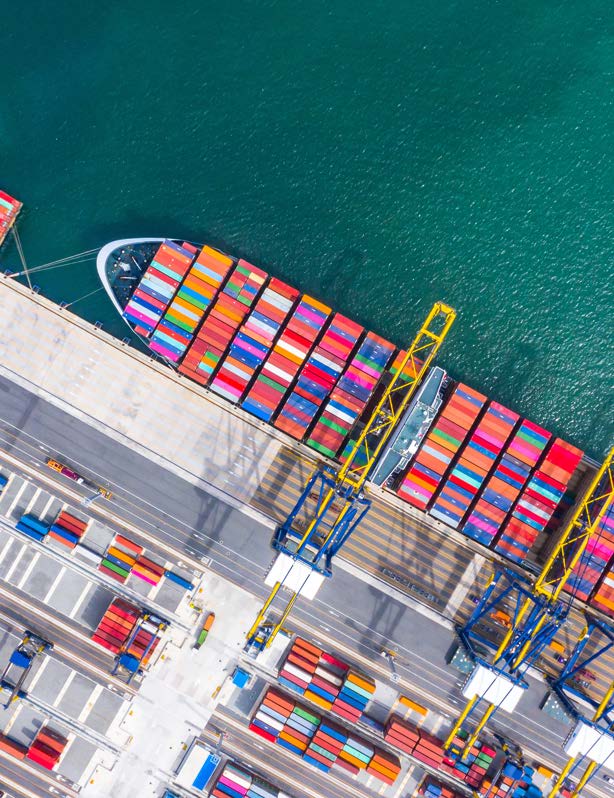
With substantial manufacturing hubs in Shanghai, Wuxi, and Nanjing, East China has become a top global player in the production of consumer devices such as smartphones, laptops, and gaming consoles, as well as semiconductors and a plethora of other electronic components. The region features over 200 EMS facilities with major customers including Apple, Amazon, and Alphabet.
| Company | Revenue | Factories |
|---|---|---|
| Foxconn | $199B | 7 |
| Jabil | $35B | 9 |
| Pegatron | $44B | 5 |
| Wistron | $33B | 8 |
| Flex Ltd. | $30B | 18 |
| Company | Revenue | Factories |
|---|---|---|
| Luxshare Precision | $32B | 12 |
| TE Connectivity | $16B | 17 |
| Amphenol Corporation | $12.6B | 16 |
| Leoni AG | $5.7B | 7 |
| Molex | $3.6B | 4 |
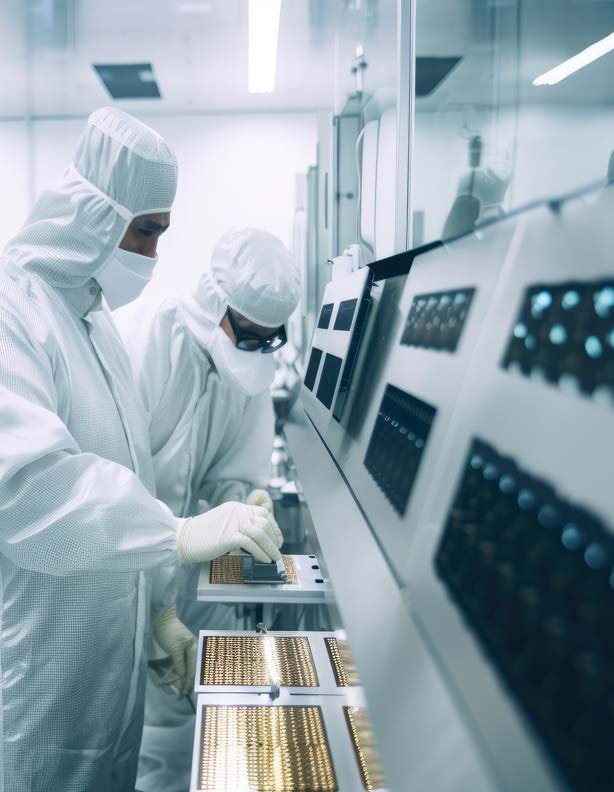
East China hosts about 60 semiconductor fabs, including major facilities for TSMC, SK hynix, UMC, and SMIC. These facilities produce a wide variety of semiconductor products across multiple technology nodes.
| Company | Location | Wafer Size |
|---|---|---|
| SMIC | Shanghai | 12-inch and 8-inch |
| TSMC | Jiangsu / Shanghai | 12-inch and 8-inch |
| UMC | Fujian | 12-inch |
| Hua Hong Semiconductor | Jiangsu / Shanghai | 12-inch and 8-inch |
| Nexchip Corporation | Anhui | 12-inch |
| SK hynix system IC | Jiangsu | 8-inch |
| Hangzhou Lion Electronics | Zhejiang | 6-inch |
| United Nova Technology | Zhejiang | 8-inch |
| Shanghai Huali Microelectronics | Shanghai | 12-inch |
| SFA Semicon | Jiangsu | IC Assembly |
| Product Line | Companies | Total Parts |
|---|---|---|
| MOSFETs | 17 | 10,530 |
| MCUs | 4 | 8,372 |
| BJTs | 16 | 8,908 |
| Rectifiers | 21 | 46,741 |
| Logic Gates & Inverters | 8 | 1,732 |
Total Parts by Product Line
Companies per Product Line

Though the region boasts a potent economy, East China is not without supply chain risks. The area is frequently impacted by typhoons and major floods, and tornadoes represent a moderate threat in provinces like Shanghai and Jiangsu. Of arguably greater concern is the region's complex labor and geopolitical landscape.
East China faces a moderate risk of tornadoes, most notably in the provinces of Shanghai and Jiangsu. While the frequency of tornadoes is low, when they do occur they can wreak considerable havoc on developed areas in their path, triggering major disruptions.
East China provinces have a high susceptibility to floods, particularly during heavy rain seasons. These events can be highly destructive, damaging facilities, derailing transportation, and impacting the workforce. Robust contingency plans are crucial for supply chain resilience.
The region is at elevated risk of typhoons, especially along the coastal provinces of Shanghai, Fujian, and Zhejiang. Typhoon season runs from May through October, and during those six months tropical cyclones can cause widespread damage to facilities and infrastructure.


In recent years, East China has been particularly vulnerable to shortages and other issues related to the power supply. Extreme weather, including a string of devastating heatwaves, are the primary force behind these problems with the power grid.
Primarily due to ongoing tensions with the U.S. and precarious relations with Taiwan, China faces a high geopolitical risk. Trade wars marked by tariffs, import/export restrictions, and sweeping policy crackdowns contribute to a cloud of economic uncertainty that significantly impacts businesses operating in the region.
Due to pervasive concerns over forced labor practices in certain regions, China represents a high labor risk. The country faces growing international condemnation, making it a pressing concern for ESG-minded trade partners. Frequent labor strikes, safety issues, and evolving employment regulations further complicate the landscape.
East China has firmly established itself as a region with a strong industrial, supplier, and customer base. Companies looking to expand their supplier portfolio can find significant opportunities here, but they must navigate a complex risk landscape.
China faces growing challenges, including strict U.S. sanctions on technology sharing and regulations on forced labor and human rights violations in supply chains. Companies should adopt a "China Plus One" strategy to mitigate risk. This shift can already be seen in many multinationals, who are diversifying and seeking manufacturing relationships elsewhere.
East China is a potential vulnerability for companies with ESG and sustainability initiatives. Companies seeking to uphold ethical standards and comply with international regulatory frameworks should put strong due diligence measures in place and operate with a high degree of supply chain and sub-tier intelligence.

Monitor 120+ disruption event types across every East China province in real time and trace each one to the exact BOMs it puts at risk.
Get a Demo