Forced labor is a form of exploitation in which individuals are made to work against their will, often under the threat of punishment or another form of coercion. The International Labour Organization defines it as work exacted under menace of a penalty and undertaken involuntarily. People are typically pushed into it by poverty, debt, or other vulnerabilities, and once trapped they are frequently deprived of their fundamental rights and freedoms. It is a global human rights issue affecting millions of people. According to the ILO and Walk Free Global Estimates, an estimated 28 million people were in forced labor in 2021. The burden is not spread evenly: the Asia-Pacific region accounts for the highest number of people in forced labor, followed by Africa and the Arab States.
This problem is particularly prevalent in the global technology industry, where products are often produced through complex and fragmented supply chains involving many suppliers and subcontractors in countries with weak labor laws. Forced labor in the technology supply chain refers to the exploitation of workers involved in the production, distribution, and disposal of technology products and services. A form of modern slavery, it can occur at any stage of the chain: from the extraction of raw materials, through component fabrication and final assembly, all the way to the disposal of electronic waste.
Workers in the technology industry supply chain may be subject to several forms of exploitation, including human trafficking and forced labor. The deeper the tier, the harder the abuse is to see, and electronics chains routinely run four, five, or more tiers below the brand on the box.
To address modern-day slavery and forced labor, governments and international organizations have implemented regulations and guidelines for business. These new and emerging forced-labor rules share a common thread: they shift the burden of proof onto companies and industries, requiring them to provide evidence that imported goods are not produced with forced labor. The US Uyghur Forced Labor Prevention Act (UFLPA), Germany's Supply Chain Due Diligence Act (LkSG), the EU Forced Labour Regulation, and Canada's Fighting Against Forced Labour and Child Labour in Supply Chains Act each impose due diligence obligations on companies across many industries. The table below compares how the major regimes differ in jurisdiction and core requirement.
| Regulation | Jurisdiction | Key Requirement |
|---|---|---|
| UFLPA | United States | Rebuttable presumption that any goods made wholly or in part in the Xinjiang region, or by listed entities, are made with forced labor and are barred from import unless the importer proves otherwise with clear and convincing evidence |
| LkSG | Germany | Supply Chain Due Diligence Act, effective January 2023: requires in-scope companies to conduct human-rights and environmental due diligence across their own operations and direct suppliers, with risk analysis, preventive measures, and reporting |
| Forced Labour Regulation | European Union | Bans the placing and making available on the EU market, and the export, of products made with forced labor; enforced through investigations by authorities that can order withdrawal of offending goods |
| S-211 | Canada | Fighting Against Forced Labour and Child Labour in Supply Chains Act, effective January 2024: requires covered entities to file an annual public report on the steps taken to prevent and reduce the risk of forced and child labor in their supply chains |
Various global forced-labor regulations and guidelines have been implemented to help eliminate and eradicate the practice, and companies must do their part. Some companies have taken steps to improve working conditions at their own sites and at their suppliers' sites, working to ensure that forced labor and other human-rights abuses are not present in their supply chains. More still has to be done. For electronics manufacturers the stakes are concrete: under the UFLPA's rebuttable presumption, a single tainted sub-tier input can trigger detention of an entire shipment, and the importer carries the burden of proving a clean chain. Mapping suppliers beyond the first tier is therefore no longer optional.
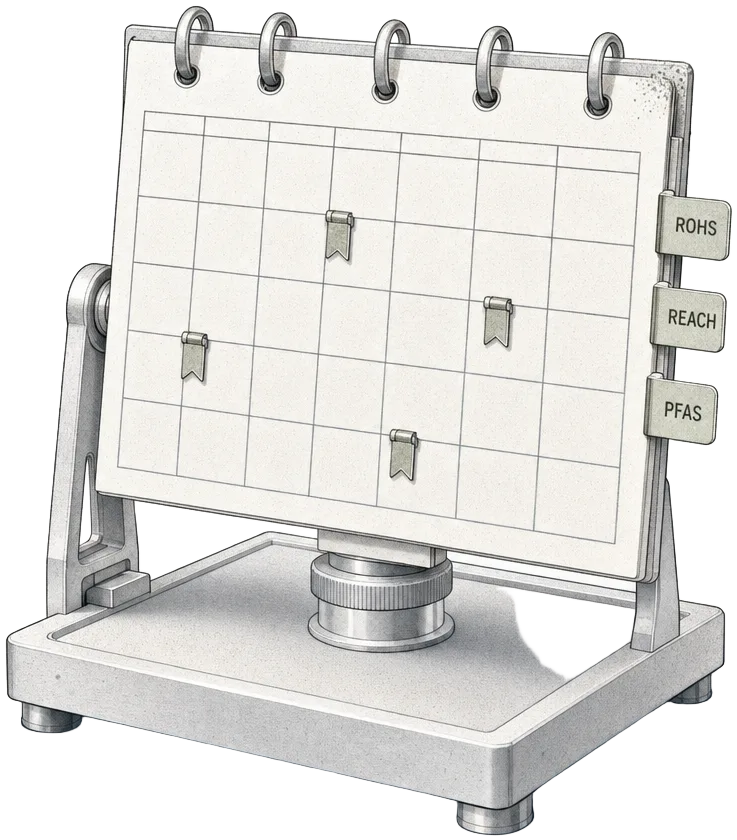
New regulations and regulatory updates continue to arrive, with many revolving around forced labor. The trend aims to entrench ESG principles, human rights, and corporate responsibility into supply chains. The ever-changing landscape of global regulation can expose an organization to potential risks that threaten business continuity and reputation. The momentum is clear in the sequence of milestones below, which move from the early UFLPA mandate toward broad, market-wide bans in major economies.
Meeting these obligations comes down to a repeatable due-diligence process: knowing who your suppliers are below the first tier, assessing where forced-labor risk concentrates, acting to remediate it, and documenting the evidence regulators expect. The same workflow supports a UFLPA applicability review, an LkSG risk analysis, and a Canadian S-211 annual report.
Trace suppliers beyond tier one to the raw-material and component sources where forced-labor risk concentrates
Screen suppliers and regions against forced-labor watchlists, entity lists, and high-risk geographies
Engage suppliers, require evidence, and adjust sourcing where exposure cannot be cleared
Retain the records and reporting needed to rebut a presumption or file a mandated due-diligence disclosure

Z2 maps your supply chain beyond the first tier to the component and raw-material sources where forced-labor risk concentrates, surfacing exposure so your team can act and document due diligence with confidence.
Get a Demo