A Look at What's Driving Obsolescence in Electronics

Although obsolescence is an expected part of product lifecycles, the last few years have seen a major spike in part obsolescence as a result of the pandemic. In 2021, 528,546 parts went obsolete. That number climbed even higher the following year, with 756,087 components going obsolete in 2022 — a year-over-year jump of nearly 50%.
New data shows that the spike in obsolescence is beginning to level off. In 2023, only 473,910 parts reached their EOL, a 37% decrease from the year prior. Data from the first two months of 2024 show this year to be on a similar trajectory, with 39,190 EOLs issued so far.
Despite the recent drop in part obsolescence, the number of companies issuing EOLs has climbed every year since 2021, with 990 manufacturers obsoleting parts in 2023. This trend is set to continue in 2024, with 305 companies issuing EOLs in the first two months of the year alone.
Looking into the history of component EOL, Z2 found that two months saw a higher number of obsolescence events than at any other time of year: March and October. While there's not necessarily any guarantee that these months will usher the most parts into discontinuation in any given year, they are certainly periods when design and component engineers and strategic sourcing professionals should be on high alert for notifications and changes to availability.

In 2023, 473,190 parts went obsolete. More striking, however, is how many of these EOL events were not preceded by a product change notification (PCN) by the manufacturer. Around 30% of these obsolete components — or roughly 142,173 parts — were not accompanied by a PCN.
This lack of communication on the part of suppliers is part of the reason why component obsolescence can be such a challenging obstacle for manufacturers to navigate. Companies that never receive a PCN for a part going into obsolescence aren't getting sufficient lead time to make the necessary modifications to their designs, BOMs, and sourcing relationships. As a result, they're forced to carry out their contingency processes in shorter timespans, increasing the likelihood of miscalculations and rushing vital supply chain deliberations.
Knowing that nearly a third of all EOLs are happening without any forewarning makes obsolescence management and the risk mitigation strategies it entails all the more critical to achieving operational continuity.

Because of just how many of them are in distribution today, it's no surprise that passive components make up the lion's share of parts going into EOL. In 2023, 79,669 resistors went into obsolescence. This was followed by 54,663 EOLs for capacitors, 53,831 connectors, and 13,367 crystal oscillators.
As there are far fewer semiconductors in distribution, the EOL figures for these components are inevitably going to be substantially smaller than they are for passives. Nevertheless, data indicates that 2023 saw a significant number of semiconductors discontinued. These included over 6,268 transient voltage suppressors, 5,884 linear voltage regulators, 4,931 microcontrollers, 3,533 rectifiers, and 2,230 MOSFETs.
Because of the profound challenges inherent in semiconductor obsolescence, these figures undoubtedly resulted in major impacts on manufacturers, distributors, and other stakeholders along the electronics supply chain. The pain point of replacing a semiconductor integral to a given product's design is felt across much of a business's operation, affecting engineering, commodity management, and strategic sourcing, among other potential teams.
Z2 surveyed electronics industry professionals to gauge their perspectives on the preeminent challenges associated with obsolescence management. The most frequent challenge, cited by just over 30% of respondents, was ensuring compatibility and performance with replacements. Difficulties with replacement suitability were followed by forecasting obsolescence trends accurately, a challenge referenced by roughly a quarter of those surveyed. Other issues included identifying alternative components, securing the budget necessary for obsolescence management, and never being notified of EOL changes.

Z2 also asked professionals what factors they felt served as the most significant catalysts for component EOL. Most respondents (38.5%) cited technological advancements outpacing component lifecycles as the most impactful, while 25.6% pointed to supply chain disruptions. Other responses included decreased market demand (20.5%) and changes to industry standards (12.8%).
When Z2 compared survey responses with actual data on what causes parts to go obsolete, notable discrepancies emerged. Industry professionals correctly identified the top three reasons behind part obsolescence — they just put those reasons in the wrong order.
Based on Z2 research, low market demand — which was cited by just a fifth of respondents — is the top reason for component obsolescence. Data showed that 78% of all EOL events are due to low market demand. Technology changes, meanwhile, which was the most popular choice among those surveyed, accounts for only 15% of EOLs. Supply chain disruptions, which 25% of respondents thought was the largest obsolescence culprit, are responsible for a relatively modest 7% of total EOLs.

Z2 drilled down to look at how obsolescence is manifesting across three critical semiconductor categories: microcontrollers (MCUs), field programmable gate arrays (FPGAs), and dynamic random-access memory (DRAM).
For MCUs, obsolescence based on node technology is stark. 350 nanometer technology, pioneered in the mid-1990s, has largely fallen into obsolescence — EOL parts account for over 70% of the total 350 nm MCUs. The 180 and 130 nm nodes saw the most EOLs in 2023, illustrating the rapid shift toward 28 and 16 nm node technologies. Under half of the total existing MCUs at the 180 and 130 nm nodes are still in active use.
In 2023 specifically: 1,495 180 nm microcontrollers were discontinued, 996 130 nm MCUs went into obsolescence, and over 1,063 350 nm and 250 nm nodes reached EOL. By contrast, 16 nm nodes had only nine components go obsolete, indicating a near-zero risk of obsolescence.
Obsolescence isn't just affecting semiconductors based on node sizes; it's also ushering out older bit technologies. 110 and 130 nm MCUs have historically featured a mixture of 8, 16, and 32 bit technologies. As the industry has continued shifting toward smaller nodes, the 8 and 16 bit technologies have increasingly been replaced with 32 bit MCUs.
Today's landscape of 40 and 55 nm nodes is composed almost entirely of 32 bit technology — something companies and their engineering teams should be keeping at the top of their minds when considering redesigns or looking into modifications to existing BOMs.
From a node obsolescence standpoint, FPGAs look reasonably similar to MCUs. The majority of FPGAs at the 90 nm size and larger have now reached EOL, with the 130 and 150 nm ICs still clinging on to rates of active use hovering between 40% and 50%. At the 28 nm size and smaller, the percentage of active FPGAs is around 90% or higher.
FPGAs at the 65 nm node are now trending toward EOL. In 2023, 65 nm FPGAs saw a major spike in obsolescence, with 215 of the semiconductors reaching EOL. A number of other nodes — including 90, 150, 180, 220, and 300 — saw obsolescence rates between 150–155 components in 2023.
Double data rate (DDR) memory first emerged around 2000 as the next generation of memory technology, succeeding SDRAM. In the two-plus decades since, it has undergone a number of evolutions — DDR2, DDR3, DDR4, and DDR5 (released in 2020).
More than half of the DDR, DDR2, and DDR3 semiconductors are now EOL, respectively, while DDR4 and DDR5 are increasingly dominant within the memory market. DDR3, introduced in 2007, is now trending toward discontinuation.
Analyzing DRAM based on node size reveals a stark shift toward more advanced wafers. Most of the DDR for nodes 40 nm or larger — all the way to 150 nm and up — are now obsolete. The 20 to 28 nm size is the current flashpoint for obsolescence, with 74.5% of these ICs now in EOL.
Obsolescence challenges can be managed by employing a variety of mitigation strategies. By proactively addressing these issues, businesses can avoid unexpected disruptions in their supply chain.
Consistently multi-sourcing all parts is of the highest priority when practicing good obsolescence management. Businesses should identify crosses that meet form, fit, and function criteria, and take advantage of technology upgrades to their parts when those opportunities arise. Good multi-sourcing also means leveraging comprehensive supply chain diversification — examining suppliers to ensure crosses are being manufactured at different sites, so that a single disruption won't wipe out multiple alternates simultaneously.
Lifecycle forecasting is another crucial approach. Being able to access and analyze the longevity of individual parts helps businesses prepare for EOL by setting up strategic roadmaps and establishing viable replacements long before doing so becomes a time crunch. Arriving at these forecasts with precision requires synthesizing market demand, technological advancements, and industry trends.
Finally, fostering communication with suppliers can help companies understand how their supply chain will hold up in the face of different obsolescence catalysts. Strategic sourcing professionals should ascertain how manufacturers are preparing for imminent compliance regulations, PCNs, or sudden shifts in demand. Cultivating strong relationships with suppliers facilitates the visibility and strategic cooperation that can head off a lot of potential future problems.
Component obsolescence is both fluid and fixed. While 2023 represented a return to normalcy after the pandemic-era spike, it still saw around 474,000 parts reach EOL. Through two-plus months, 2024 is on track to reach a similar figure.
Obsolescence management is a constant hurdle for businesses. With Z2's Part Risk Manager, teams can get the edge they need to navigate disruptions and pick parts that match their product needs perfectly. Powered by a database containing information on over one billion components, Part Risk Manager lets you easily search for and compare parts that meet your form, fit, and function requirements.
The platform also offers a proprietary lifecycle forecasting algorithm to help you proactively tackle obsolescence risks to your product's lifecycle. With Part Risk Manager, it's easy to view end-of-life projections, find suitable replacements, and design products that last longer — allowing you to minimize disruptions and mitigate unnecessary costs. See data on parts — including lifecycle status, regulatory compliance, market availability, and cross-references — from a single centralized platform.
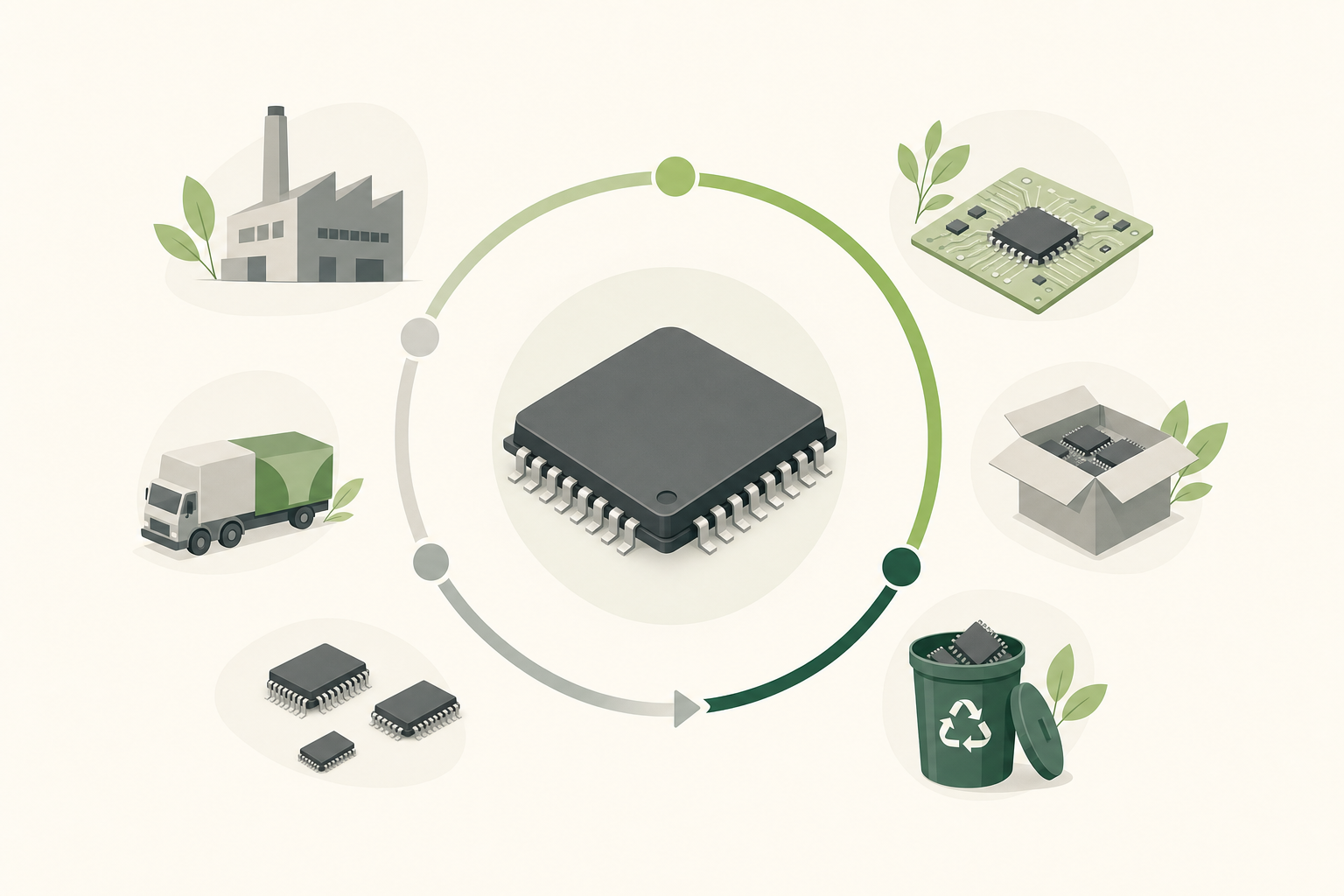
Identify crosses meeting form, fit, and function criteria. Diversify across manufacturing sites so a single disruption doesn't eliminate multiple alternates simultaneously.
Access longevity data for individual parts to prepare for EOL well in advance. Synthesize market demand, technology trends, and industry shifts into strategic roadmaps.
Cultivate strong supplier relationships to surface PCN warnings early. Understand how manufacturers are preparing for compliance changes and demand shifts before they become crises.

Upload a BOM and get lifecycle status, EOL forecasting, obsolescence alerts, and qualified replacements for every component across 1B+ parts in one view.
Get a Demo