A practitioner's guide to identifying, prioritizing, and resolving risk across your multi-tier supply chain.
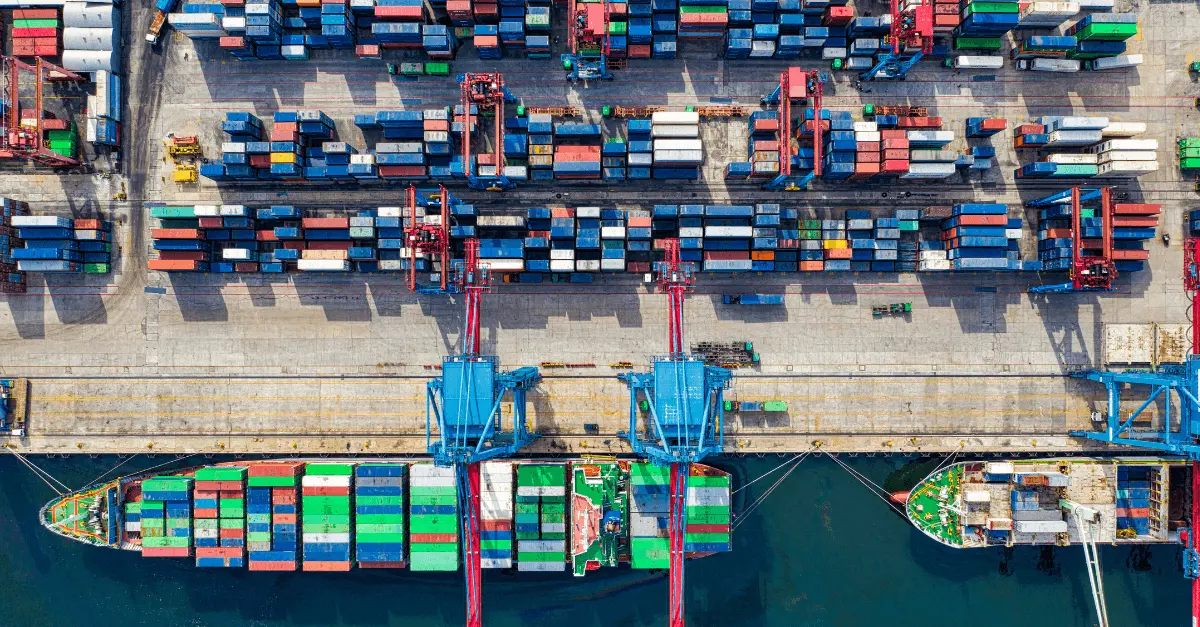
Supply chain risk management (SCRM) is a systematic discipline for identifying vulnerabilities, disruptions, and threats throughout a multi-tier supply chain and building structured responses before those threats reach production. The scope is broad: risk can originate from a direct supplier, a sub-tier manufacturer two levels removed, a raw material source, a logistics node, or a geopolitical event on the other side of the world. Done well, SCRM converts unpredictable external forces into known, prioritized, and managed exposures. Done poorly, a single unmonitored supplier failure cascades into production stoppages, missed shipments, and revenue loss across an entire product line. For electronics OEMs the stakes are particularly high, because component lead times, single-source dependencies, and regulatory requirements all compound the cost of being caught unprepared.
Most manufacturers have reasonable visibility into their Tier 1 suppliers. Below that layer, the picture deteriorates fast. The fabs, foundries, sub-assembly facilities, and raw material sources behind your direct suppliers are often opaque, and that is precisely where concentration risk hides. A single fab in a seismically active region may supply components to several of your Tier 1 partners simultaneously. Without sub-tier mapping, you would not know this until an earthquake stops production and multiple supplier shipments fail at once. Part-to-site mapping addresses this by tracing every component in a BOM back to its actual manufacturing location, revealing geographic concentration, single-source dependencies, and country-of-origin exposure before any event occurs. Supplier surveys cannot build this map fast enough; a platform grounded in verified, proprietary relationship data can.
Disruption risk covers macro-level external events: natural disasters, pandemics, geopolitical conflicts, port closures, and labor actions. The defining characteristic is that these events originate entirely outside your organization and often outside your direct supplier relationships. A factory fire at a semiconductor fab in Japan can simultaneously affect dozens of OEMs whose supply chains converge on that single site. The 2000 Philips plant fire near Albuquerque illustrates this precisely: a lightning strike caused a fire that damaged millions of microchips. Nokia, which had multi-sourced the affected components, absorbed the disruption within weeks. Ericsson, single-sourced from the same plant, suffered a production shutdown and significant revenue loss. The lesson is not simply to diversify suppliers: it is to know, in advance, exactly which of your parts flow through any given site so you can act the moment a disruption is confirmed.
Forecast risk is the gap between projected demand and actual demand, and its consequences travel up the supply chain in amplified form. Small fluctuations in end-market demand become large swings in component orders as each tier of the chain overreacts to signals from the tier below. This is the bullwhip effect, and it drives both excess inventory and dangerous shortages at the component level. For procurement teams the practical consequence is either capital tied up in components you do not need, or allocation shortfalls during a demand surge when lead times are already extended. Lifecycle responsiveness compounds the problem: if a component is approaching end-of-life and demand forecasts failed to flag the transition, teams are scrambling for alternates at the worst possible moment. Building responsiveness into both demand planning and component lifecycle tracking reduces the amplitude of these swings before they become crises.
Delay risk arises when logistics events interrupt the physical flow of goods: port closures, customs holds, air freight capacity constraints, or a single oversold shipping lane. Unlike disruption risk, delay risk is often geographically concentrated and short in duration, but the consequences for production schedules can be severe when inventory buffers are thin. The practical response has two components. First, pre-map approved alternates so that when a shipment is held, engineering can qualify a substitute without starting from scratch. Second, carry smart inventory buffers calibrated to realistic lead-time variability, not theoretical averages. Teams that know their single-source dependencies at the country and site level can prioritize buffer investment where delay exposure is highest, rather than applying uniform safety stock across an entire BOM.
Inventory risk sits at the intersection of obsolescence rate, demand uncertainty, and the number of viable supplier sites for each component. Too little inventory on a long-lead-time component stops production. Too much inventory on a component heading for discontinuation writes down capital. Both outcomes are avoidable with the right data. Component-level obsolescence forecasting identifies which parts are approaching end-of-life so teams can place last-time-buy orders or qualify alternates before the discontinuation is announced. At the production level, Toyota's practice of running plants at roughly 80% utilization is instructive: the reserved capacity absorbs demand variation without forcing emergency orders. The same logic applies to component inventory: a modest, data-informed buffer against lifecycle transitions and demand spikes costs far less than an emergency procurement at spot-market rates.
Technology and component risk covers three distinct threats that often arrive together. Obsolescence: a component generation reaches end-of-life, and the replacement requires engineering validation time your schedule does not have. Compliance: a substance in the component's material stack is added to a restricted list under RoHS, REACH, or Prop 65, triggering a qualification cycle and a potential production halt. Multi-sourcing gaps: a component is sourced from a single supplier in a single region, leaving no fallback when allocation tightens. Lifecycle forecasting built on validated historical models gives procurement engineers early warning on obsolescence, typically well before a formal discontinuation notice. Compliance screening against current regulatory lists identifies at-risk components before a customer audit or a regulatory deadline surfaces the gap. And pre-mapped alternates reduce the time between a disruption and a qualified replacement from months to days.
Supplier risk encompasses the financial, geographic, reputational, and structural vulnerabilities of the organizations your supply chain depends on. A supplier approaching bankruptcy may continue shipping on schedule right up until the day it cannot, and by then the lead time to qualify a replacement is measured in months. A supplier with heavy revenue concentration in a single customer faces a structural fragility that financial statements may not fully capture. Geographic concentration within a supplier's own production network creates exposure to regional events. Market consolidation, where a sole-source component supplier is acquired and the product line is rationalized, has ended more than one program. Robust supplier risk assessment looks across financial health, geographic footprint, ownership structure, geopolitical exposure, cybersecurity posture, and ESG standing, because any of these dimensions can be the one that matters when conditions change.
Site risk is supplier risk made geographic and specific. Your direct supplier may look financially healthy and operationally stable, but if that supplier produces your component at a single facility in a region exposed to typhoons, power instability, or geopolitical tension, the supplier's balance sheet is not protecting you. Site-level risk scoring combines country-level factors such as political stability, infrastructure reliability, and labor law environments with city-level data on natural disaster exposure and historical power outage frequency, plus incident history specific to each facility. The AKM semiconductor fab fire in 2020 illustrates the mechanism: the site served multiple Tier 1 suppliers across the industry. OEMs with part-to-site mapping knew within hours which of their components were at risk. Those without it spent days manually tracing the exposure. Manufacturing site visibility is the layer that converts a news event into an actionable impact assessment.
Z2's Supply Chain Watch maps your BOM to manufacturing sites across Tier 1 and sub-tier suppliers using a verified, proprietary database, so you get visibility on day one instead of waiting on supplier surveys. Z2's Supplier Insights profiles more than a million suppliers for financial, geographic, reputational, and operational risk, so your risk posture rests on continuous intelligence rather than reactive triage. When a disruption event fires, the platform connects it directly to your affected parts and surfaces sourcing alternatives from Z2's component database. Alerts are filtered to the parts that actually matter to your products, cutting the noise that causes teams to ignore the signals that count. The result is a program that can answer the question every supply chain risk leader needs to answer in real time: which of our products are affected, and what do we do next.

Supply Chain Watch traces every component in your BOM to its physical manufacturing site, covering 70% of off-the-shelf electronic components out of the box, so you see sub-tier concentration risk, single-source dependencies, and country-of-origin exposure before a disruption event forces the question. When an event does fire, it maps directly to your impacted parts and surfaces alternate sourcing options, converting a news alert into an actionable response.
Get a Demo